How to learn
Why learn at all in the age of AI and how to do it: retrieval practice, spaced repetition, transfer of knowledge, and a hard look at the myths.
 DigitableCourses
Local and account-free. No account, no sign-up: whatever you type into the tools stays in this browser's localStorage and never reaches a server.
Our own counter records page opens and finishes: the address leaves, plus one tenth-of-the-text figure. No cookies, no outside trackers, your IP is not stored, Do Not Track is honoured. How to check that
The portal's own repository is not published, so we do not call it open source. What is open:
The portal lives on donations, paid consultations and requested write-ups, and on Workbench sales.
There are no plans to make the courses paid.
Deployment of 16 September 2026, snapshot 95043e5
What has changed on the portal since your last visit. The full list of deployments is in the “What has changed” section on the About page.
Work through the programme in order or open the track you need — all of it is free. Standalone articles and videos sit alongside, under their own tabs.
The entry point for anyone starting out: how programming and the industry actually work, how software really gets made, and how to manage your own time and attention.
Why learn at all in the age of AI and how to do it: retrieval practice, spaced repetition, transfer of knowledge, and a hard look at the myths.
From personal interests to research questions, papers and a defence: universities, sources and an article builder.
Techniques for memorizing lists, numbers, dates, words, names and definitions — with an honest walkthrough of which memory-school promises hold up and which do not.
Search while you are building something: from symptom to term, primary sources instead of retellings, credibility checks, searching code and history, and when to stop searching and go verify.
For complete beginners: how a computer works, your first program, variables, loops, your first project.
The big picture: from the transistor and bits to networks, the web and the application.
What a job in IT is made of: SDLC, roles, enterprise and startup, grades, salaries, interviews.
Attention and energy, GTD, the calendar, pomodoro, fighting procrastination and burnout.
The base without which everything else turns into cargo cult: mathematics, data structures, algorithms, how operating systems work, paradigms, principles and lambda calculus.
Down into the hardware: instruction sets and RISC-V, pipelines and out-of-order execution, caches, SIMD, accelerators, chip fabrication.
Feedback loops, stocks and flows, delays and leverage points on engineering examples: a queue, a cache, tech debt, an incident.
Sets, logic, linear algebra, category theory, computability, game theory and chaos theory.
From the living history of reasoning, concepts and syllogisms to sophisms, statistical traps and engineering argument.
From the array and the hash table to probabilistic and persistent structures.
Sorting, DP, graphs, strings, geometry, NP-completeness and practical optimization.
From Unix and BSD to Linux: kernels, memory, filesystems, boot, init, WM, containers.
OOP, FP, logic, reactive, actor-based — and how to mix them.
SOLID, DRY/KISS/YAGNI, clean code, refactoring, 12-factor, code review.
In plain language: notation, reductions, Church numerals, the Y combinator, the Curry–Howard correspondence.
Full zero-to-production courses in eight languages, plus a separate deep course on functional programming.
Goroutines, channels, context, production architecture and static binaries.
BEAM, OTP, supervision, Ecto, Phoenix and fault tolerance by default.
The type system, the event loop, validation, testing and deployment of services.
Business rules in Russian and English with no brackets: how to run them, cover them with example-tests, print them into working code, tie them to a domain model and let AI agents call them.
A walkthrough of the language from its own sources: two classes of programs, proof of termination, the type system, the interpreter, printing into eight target languages — and an honest list of what it still lacks.
async/await, Channels, EF Core, DI, Testcontainers and OpenTelemetry.
The data model, idioms, typing, asyncio, tests, data, web and production.
OOP, collections, streams, the JVM and memory, Spring, persistence, deployment.
Ownership and borrowing, lifetimes, traits, async, unsafe and FFI.
Pointers and memory, building and linking, system calls, processes, threads, assembly.
Purity, immutability, composition, monads, a map of functors, effects and architecture.
The browser, HTML/CSS, React, state, the build, performance and testing.
iOS and Android, cross-platform, offline, push, publishing to the stores.
How code becomes a system: patterns, architectural styles, context boundaries and trade-offs made on purpose.
GoF, concurrency patterns, functional patterns and antipatterns.
Layers, microservices, event-driven, CQRS, saga, resilience, system design.
Strategic and tactical DDD, event storming, DDD in code.
Failures, time and clocks, CAP, consensus, replication, idempotency.
Lexer, parser, AST, types, IR, codegen, VM, garbage collection, JIT.
Data engineering, databases, machine learning, neural networks, search algorithms and applied AI engineering.
How LLMs, neural networks and prompting actually work: from Markov chains to agents and orchestration.
Working with an agent in a real codebase: context, tools, review, where the agent lies and what it costs.
ETL/ELT, modeling, batch and streaming, orchestration, data quality.
SQL and NoSQL: Postgres, MySQL, ClickHouse, Redis, Cassandra, Mongo, vector databases, S3 — and how to choose.
From question to conclusion: SQL, distributions, uncertainty, A/B tests, causality, cohorts and Goodhart's law.
All the basic algorithms: regressions, SVM, trees, ensembles, clustering, MLOps.
Backprop, CNN, RNN, transformers, LLMs, generative models, inference.
Prompting, CoT/ToT, RAG, ReAct, MCP, benchmarks, local models, prompt injection.
Genetic algorithms, multi-objective optimization, automated test generation, APR.
Blockchain, consensus mechanisms, EVM, smart contracts, wallets, decentralized storage.
How code reaches the user and stays alive: CI/CD and clouds, editors, testing and engineering practice.
SLIs and SLOs, the error budget, alerts and on-call, incident walkthroughs, degradation instead of failure and safe releases.
The internal platform as a product: the golden path, self-service, developer experience, cost of ownership and adoption by teams.
Jenkins, GitHub Actions, Docker, Kubernetes, Terraform, AWS/Azure/GCP, VPS, observability.
Test design, manual, unit, integration, E2E, API, load, security, automation.
The tool writes call records into your source: what was called, with what, what came back. Install, first run, refusals, picking calls, working with an agent, eight languages and the limits.
The documents an engineer writes on the job: ADRs, RFCs, postmortems, READMEs, API documentation and reviewing text.
English in working situations: documentation and RFCs, commits and pull requests, review, correspondence, calls, interviews.
vi/Vim and Neovim, Emacs, VS Code, JetBrains, Zed — and an honest comparison of them all.
Blender driven by an AI agent over MCP: running with no monitor and no GPU, procedural modeling in code, materials and rendering, export to GLB and acceptance of game assets.
TCP/IP, DNS, HTTP, TLS, QUIC, load balancing, CDN, diagnostics.
OWASP, authentication, OAuth/OIDC, JWT, cryptography, secrets, privacy.
Measurement, profiling, memory, caches, databases, load testing.
The data model, branching, rebase, recovery, monorepos, review.
WCAG, semantics, ARIA, the keyboard, screen readers, accessibility testing.
Microcontrollers, peripherals, interrupts, RTOS, IoT, sensors, robots.
Client and server, data, integration, environments, builds, quality, CI/CD, scaling, operations.
How knowledge turns into delivered value: product, project management, Scrum mastering, systems analysis, UX and the basics of management.
The work of a team lead: one-on-ones, feedback, hiring, growth, delegation, tech debt and on-call rotations.
Discovery, metrics, prioritization, MVP, experiments, growth.
Agile, Kanban, Lean, Scrumban, estimation, risks, DORA, scaling, a comparison of methodologies.
The Scrum Guide line by line, events, artifacts, facilitation, antipatterns, exam preparation.
Requirements, documentation, UML and BPMN, integrations, prototypes, stakeholders, acceptance.
Research, personas and JTBD, information architecture, prototypes, design systems, usability tests.
How a product reaches the user and how people pay for it: SaaS and cloud tiers, licenses, pricing, stores, updates.
Freelancing, pricing, contracts, a product of your own, unit economics, risks.
The software lifecycle, development models, PMBoK, PRINCE2, delegation.
Articles, guides and walkthroughs outside the track programme. Six of the most recent are here; the full list with pagination and filters lives on its own route.
This page has not been translated into English yet. The Russian original is complete and current: open it in Russian. The English edition ships in stages — interface and …
This page has not been translated into English yet. The Russian original is complete and current: open it in Russian. The English edition ships in stages — interface and …
This page has not been translated into English yet. The Russian original is complete and current: open it in Russian. The English edition ships in stages — interface and …
This page has not been translated into English yet. The Russian original is complete and current: open it in Russian. The English edition ships in stages — interface and …
This page has not been translated into English yet. The Russian original is complete and current: open it in Russian. The English edition ships in stages — interface and …
This page has not been translated into English yet. The Russian original is complete and current: open it in Russian. The English edition ships in stages — interface and …
Lectures, streams, walkthroughs and translations. Six of the most recent are here; the topic filter and the channel links live on their own route.
Have you tried “Openclaw” yet? It seems like the Fireship channel blogger tried it and decided to make a video about …
This is a translation and adaptation of a video from the Fireship channel using AI. ▶ Source: …
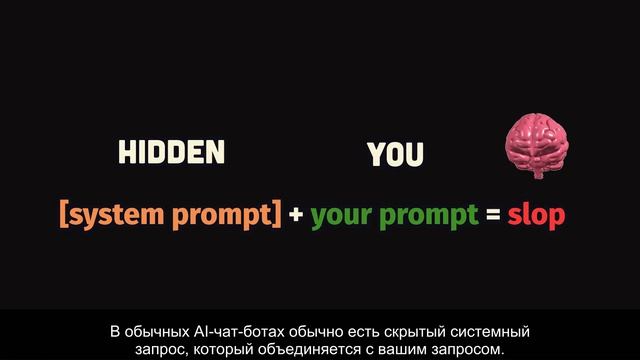
This is a translation and adaptation of a video from the Fireship channel. ▶ Source: https://www.youtube.com/watch?v=mBHRPeg8zPU | …
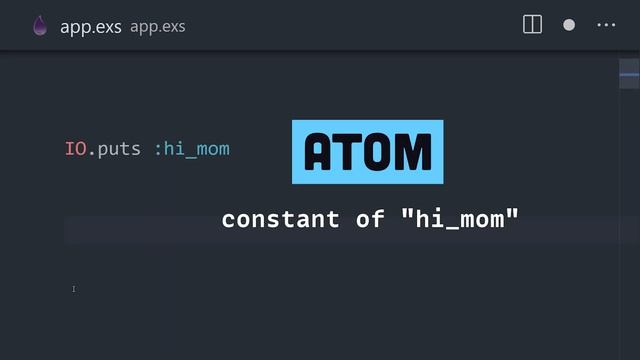
This is a translation and adaptation of a video from the Fireship channel using AI. ▶ Source: …
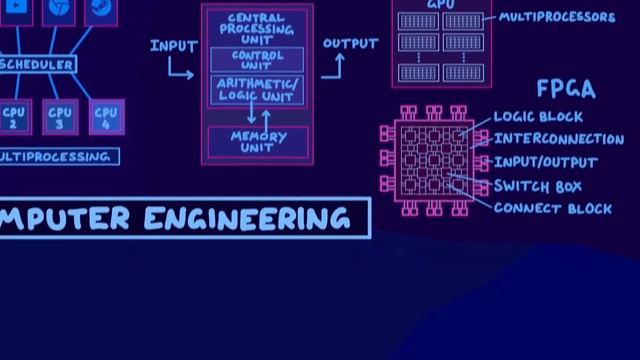
This is a translation and adaptation of a video from the Domain of Science channel using AI. ▶ Source: …
The tracks do not have to be taken strictly in order, but the stages are arranged so that each next one rests on the previous. If you do not know where to begin, open the roadmap: it holds routes for particular goals (backend engineer, ML engineer, architect, team lead).